0 800 335 278
Quick website promotion
 24.06.2025
Tenders and partnerships
team@comon.agencySales department
sales@comon.agency


The slower the site loads, the faster the user loads himself. And he goes to a competitor whose site opened in 1.7 seconds and immediately showed him: “Here it is, your coffee/tires/course on target.” That’s it: the money went away – not to you.
In this article, we’ll show you how not to ruin the impression of yourself before the person even has time to read “Hello!”. We will analyze how to launch a new website so that it can already do something in 90 days. We will tell you about fast website promotion: who is suitable for it, how to do it correctly, why speed is critical for traffic, sales, and rankings. And we will explain what really works.

When a modern online user clicks on a link, they want to see the result immediately. And if nothing appears, they want to close the tab. Not because they’re impatient, but because there are plenty of other options where they don’t have to wait.
About 30% of users close a website if it doesn’t open in 3 seconds. More than 5 – and up to 70% simply leave. They didn’t read it, they didn’t learn it, they won’t come back.
People are used to everything working fast. And if something freezes or a blank screen appears, it looks like a problem, even if it’s temporary.
Google evaluates websites not only for content but also for usability. There are so-called Core Web Vitals: technical indicators that affect visibility in search results. If a page takes a long time to load or something jumps while you’re browsing, it’s a signal to the search engine that the user is uncomfortable.
In short, a fast website is easier to find, more pleasant to use, and better for sales. Websites with a speed of 0.5-2 seconds have the highest conversion rates. And according to Shopify, plus one second on mobile is a minus of up to 27% of purchases. At the same time, a negative first experience generally discourages people from coming back: 79% of people simply do not come back.
That is, quite often the problem is not in the product, price, or advertising: it’s just that the buyer did not wait for the payment page to load. And that’s it: they are already on a competitor’s website.
Search bots spend a limited amount of time on each site. If the page opens slowly, some content may be left out of the indexing. As a result, even great content won’t appear in the search and, unfortunately, this cannot be fixed with SEO texts or keys until the technical brakes are resolved.
So, fast website promotion is necessary for people to find out about you at all. If the site opens quickly, both users and search engines see it. And if it slows down, it is simply closed, and that’s it. And while the site is slow, competitors are already taking your audience.
Some companies promise to promote a website quickly and that it will reach the top almost the next day after launch. But such statements have no real basis in fact, because SEO does not work in a “one-click” mode.
In practice, such promises often end in nothing or even in the imposition of sanctions from search engines. Search algorithms evaluate not the speed of a website’s appearance, but its quality, technical serviceability, and content. Therefore, it takes time and systematic work to gain Google’s trust.
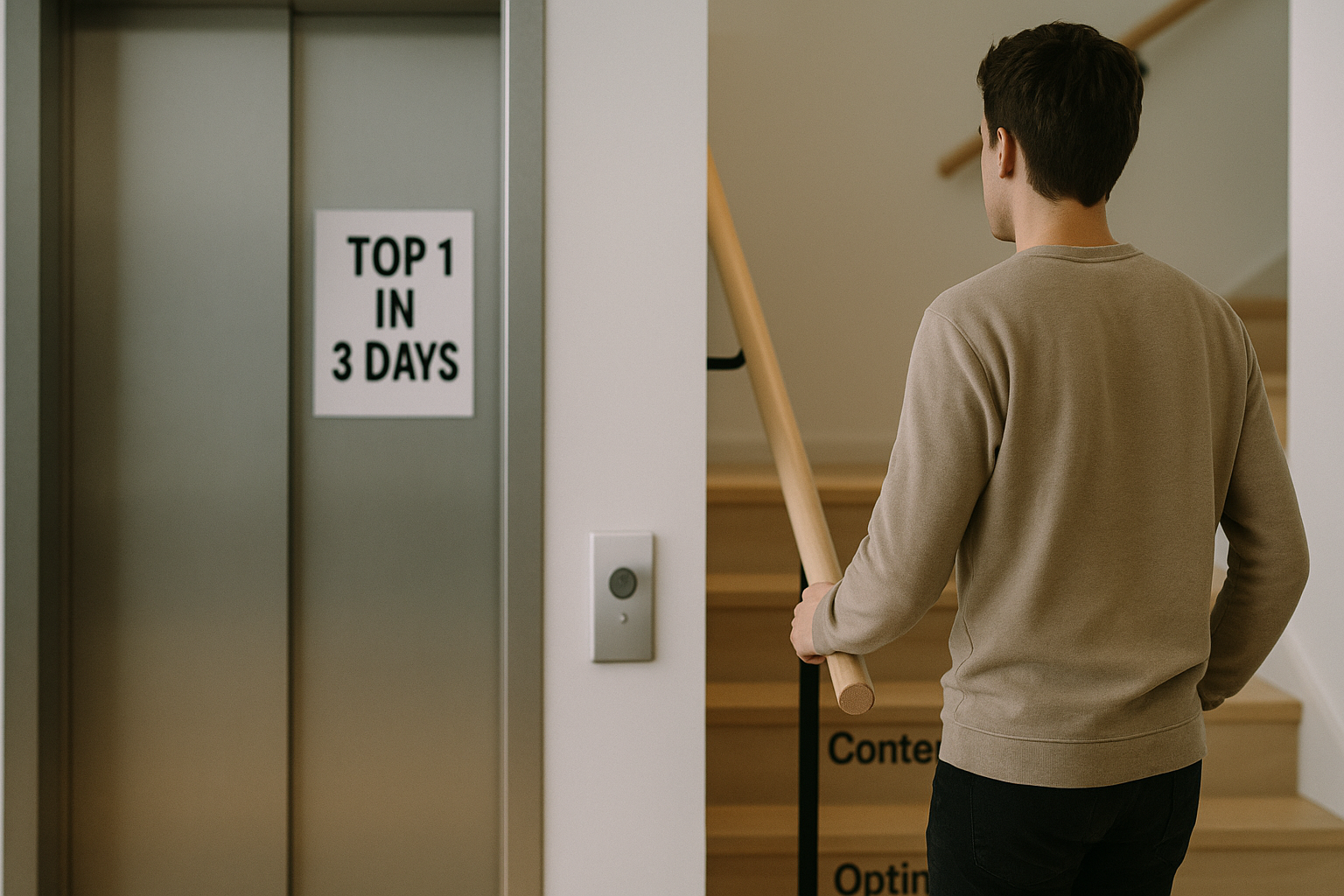
This is especially true for new resources. The common concept of Google’s “sandbox” describes a situation where young sites do not immediately appear in the top, even with the right settings. They are not blocked, and there are no artificial restrictions: it’s just that the sites do not yet have authority, external links, and a sufficient amount of quality content. And the search engine first “observes” before bringing the newcomer into the competitive search results zone.
Nevertheless, there are examples when a tangible result was achieved within a month of work. For example, according to SEO-akademiya, a competent strategy allowed to bring more than 60% of the landing pages of a new website to the top of the search results in just 30 days. This became possible thanks to well-coordinated actions:
Websites with a clear structure, responsive design, and normal loading speed are indexed faster.
What practice shows:
New projects should focus on a stable base:
It is this approach — promoting a young website with a quick start — that yields noticeable results.
Some sites wait for years to get to the top of Google, while others launch SEO and see traffic growth in a few weeks. How does fast website promotion work, and who is it suitable for?
When we say “fast SEO”, we mean concentrated work in the first 60-90 days. It includes not only basic optimization, but also the elimination of technical problems, work with content, and accelerated indexing. The point is to create a foundation that will start generating noticeable traffic in 2–3 months.
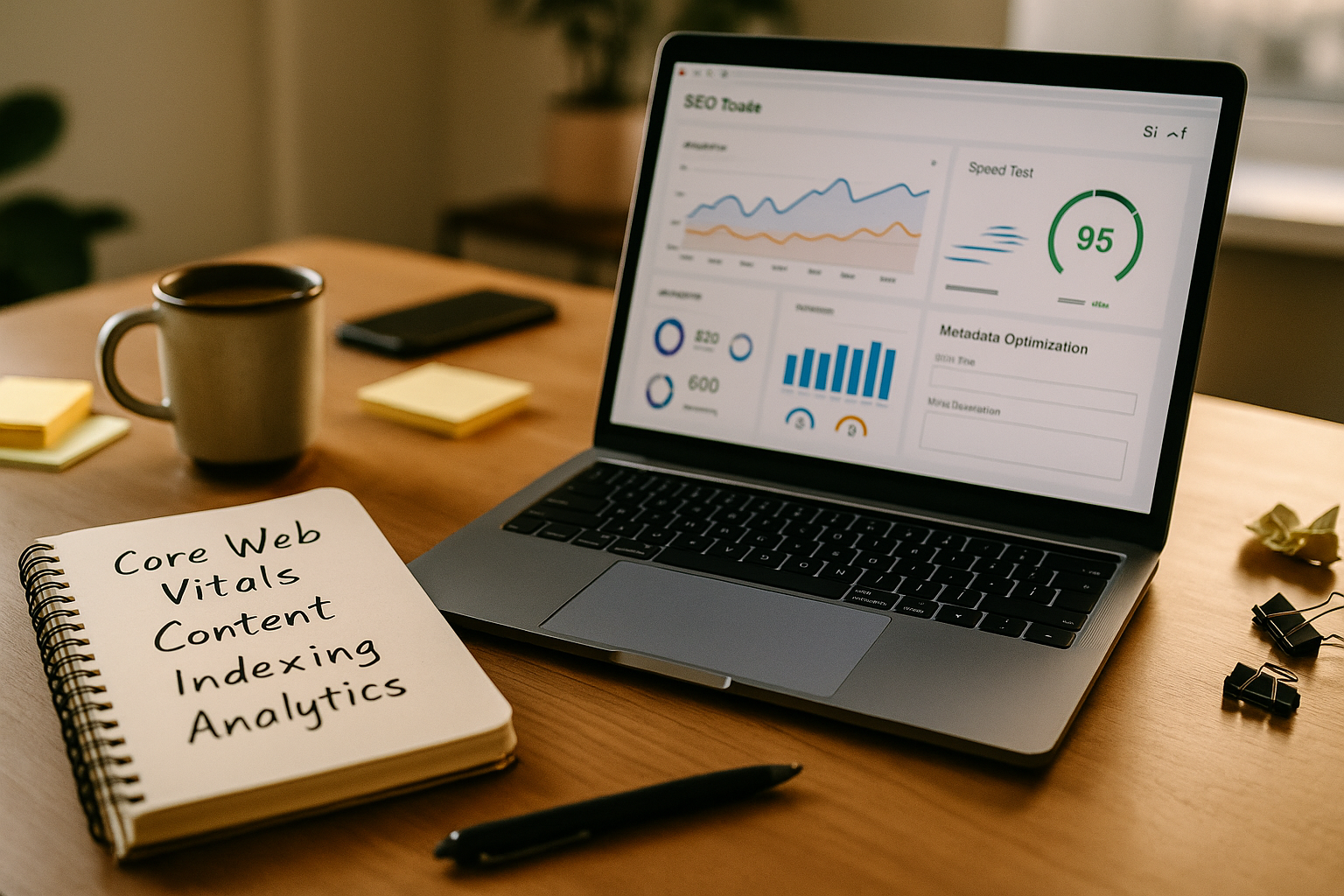
Here is what is usually included in this process:
There are many examples of new sites reaching prominent positions in 70-90 days in competitive niches (for example, it worked in the areas of online education or local services).
This approach is not universal. But if your business:
then quick SEO promotion can give you a very strong start.
For example, in the EdTech sector, blitz-SEO allowed one of the startups to increase traffic by more than 300% in just 10 weeks. And it wasn’t just visits – users left requests and registered for courses.
What else does rapid promotion give you besides pace?
But this approach works only if you cover everything: technical part, content, analytics. If you neglect one of these, the result will be either short or unstable.
A few more important points:
Real data:
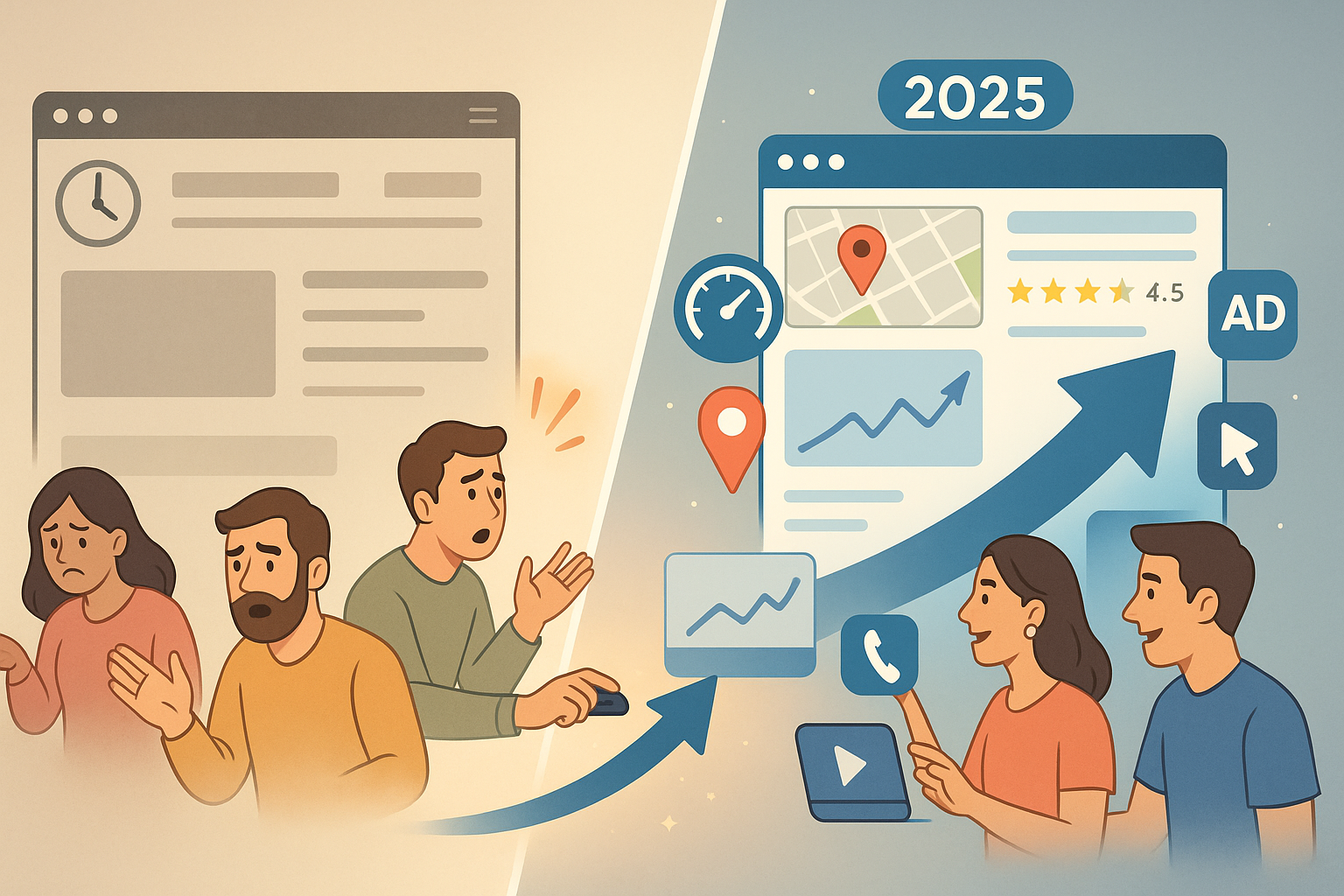
In 2025, a website is a “customer touch point” that decides whether to visit or pass by. That is why it is important not only to create a resource but also to quickly launch it in the visible part of the search results. We share proven methods that really work.
Google doesn’t see the design of the site, but it definitely sees the code, speed, and structure. If the page loads slowly or looks strange on a smartphone, the user simply leaves without explaining the reasons.
There is evidence that even a 0.1-second delay can affect search engine rankings. For example, on one local website, it was enough to compress the image, remove heavy JavaScript, and the page soared several positions up.
Test:
Online store owners often underestimate the impact of page titles, meta descriptions, and snippets. If they are gray and impersonal, people simply won’t click on them, even if the site is in the top.
So add video reviews, improve meta tags, and optimize for mobile devices. The combination of SEO and PPC allows you to retain traffic and attract additional indexing signals. For example, Performance Max works great with products that do not yet have stable search traffic.
Do this:
If a user sees you only in search, they may not trust you. However, if you are mentioned in Facebook groups, on forums, or in comments under thematic articles, this is a signal.
Guest posts on reputable resources such as AIN.ua or MC.today provide not only traffic but also high-quality backlinks. According to Word Stream, blogs receive 97% more backlinks and have 13 times higher chances of ROI.
Therefore, you should:
A person opens their phone, enters “coffee near me” or “Obolon hair salon,” and decides where to go in a few seconds. If your business isn’t in the local search results, you’ve lost a customer before they even know about you.
Businesses that appear in the Local Pack can receive up to +46% of traffic from geo-referenced queries. And it’s not just about big companies: even a small atelier or coffee shop can get this boost without big budgets.
So you should start with the obvious: Google Maps, Hotline.ua, or Lun.ua: that is, all the places where your audience visits. But it’s not enough just to be listed somewhere. People read reviews, look at photos, and compare work schedules. Therefore, it is important not just to register, but to fully work with Google Business Profile (GBP).
If your GBP profile has:
then the chance that the user will come to you increases significantly.
Completed profiles receive 76% more actions – calls, conversions, and routes. This is because people trust live profiles and Google itself promotes such businesses.
To do:
Micro-markup itself already enhances the search results: rating stars, recipe blocks, reviews. It is visually appealing and increases CTR by 10-50%. But if you add to this a local schema (such as LocalBusiness) and a full-fledged profile in GBP, the result is noticeably enhanced. Such sites get not only a place on the map, but can also appear in the Knowledge Panel or even in Top Stories. This is especially useful for beauty salons, medical centers, coffee shops, and anyone who works at a physical location.
Be sure to:
How quickly to expect the results of website promotion is a complicated question, because it depends not only on the budget or keywords. There are many factors.
In the first 1-3 months, the following usually happens:
One example is a website in the delivery niche: after technical cleaning, instead of 8 pages, the search results became more than 120. This is not yet traffic, but the search engine has finally seen the site in its entirety.
3-6 months: the website starts to gain momentum
At this stage, you can already see gradual changes: the content is updated regularly, the first backlinks appear.
In medium-competitive niches (such as cosmetics), the site starts to get into the TOP 20 for specific queries (for example, “buy cream with SPF”).
6-12 months: consistency emerges
At this stage, it is usually possible to achieve stable rankings for medium- and highly competitive queries. The website becomes recognizable in the search results, organic traffic grows, and behavioral indicators improve.
After a year: the site is working for you
After 12 months, all efforts begin to combine into an effective system. Content continues to generate traffic, domain authority is growing, and search engines already “know” you. The main thing at this stage is not to lose momentum and maintain quality (regular updates, adaptation to changes in SERPs and new algorithms, etc.).
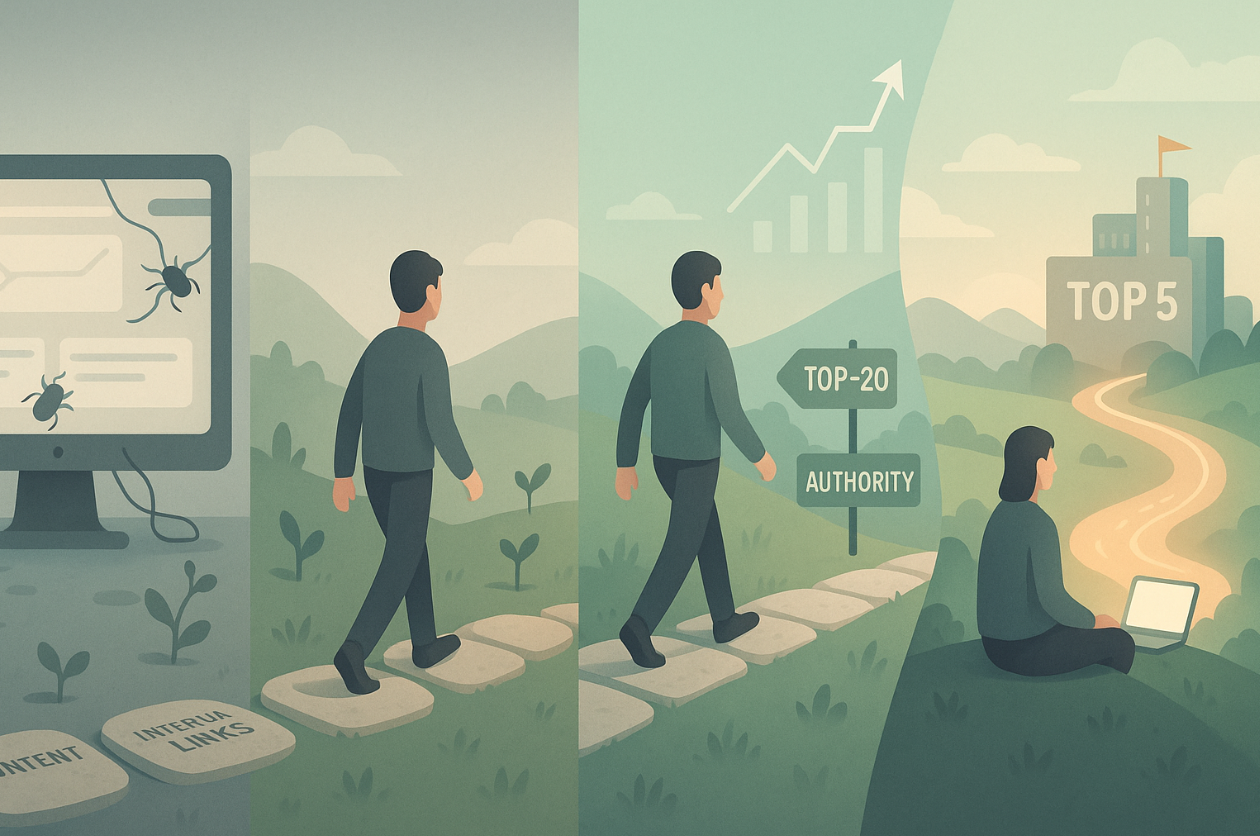
Why does one site gain momentum in 3 months, while another barely breathes a year later? This is influenced by certain factors, namely:
The age of the site. Websites that have been online for more than three years are more likely to appear in the top positions of the SERPs (about 60% of the top sites are “old-timers”). However, age alone is not a trump card. If there is no content on the domain, no blog, no changes, Google perceives such a resource as a forgotten storefront.
Competition. SaaS, e-commerce, finance, and medicine are the areas where you need to do your best. In these niches, an SEO campaign can last more than a year. Comparative analysis is the key. What do competitors publish? How deep is their content? What is their UX? In an oversaturated niche, you need more time, content, and backlinks.
Budget. SEO results directly depend on the resource. The minimum starting budget ($500-700 per month) allows you to cover technical audit, content creation, analytics, and external optimization.
According to HostPro, for every $1 invested in SEO, you can return about $22. But not immediately – most often in 6-12 months.
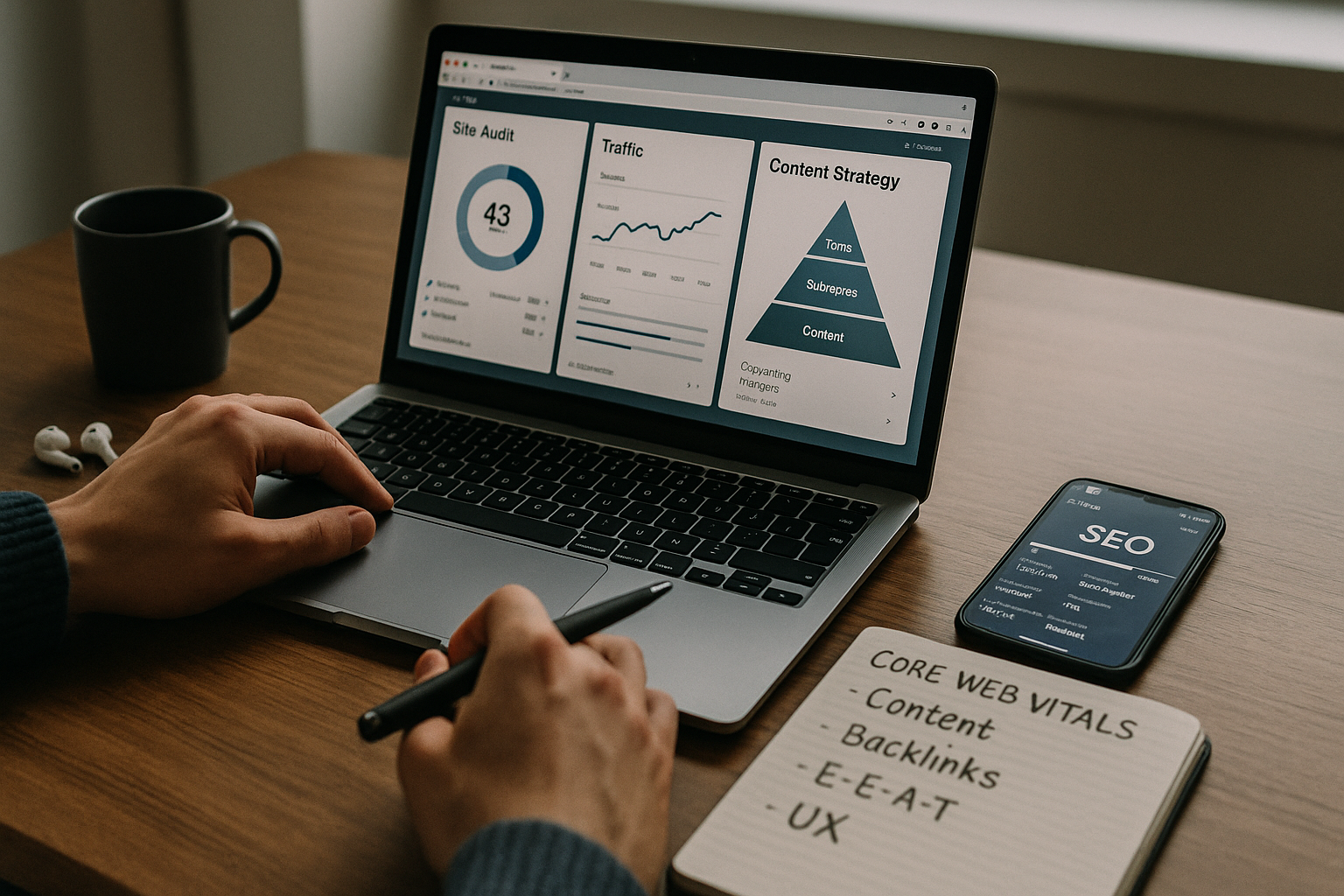
Technical condition (loading speed, adaptability, correct sitemap). In 2025, Core Web Vitals (LCP, INP, CLS) will be among the three most important ranking factors. Google gives preference to those who work faster. There are examples when, after implementing caching, compressing scripts, and transferring to faster hosting, traffic grew by 30-40% without any changes in content, because pages started loading in 2 seconds instead of 6.
Content. It should be deep, relevant, and created by authoritative authors. Pages with an active blog receive 97% more external links. This is due to trust, engagement, and the ability to respond to a request.
Reputation. E-E-A-T: experience, expertise, authority, trust: are critical elements. They can be strengthened by:
Sometimes a single link from a specialized media outlet can raise a page to the top 5.
Behavioral signals. If people come in, read for a few seconds, and leave, the search engine records this. It realizes that the page did not provide an answer. But if a visitor reads, goes to other sections, clicks buttons, and returns, this is a positive signal.
Social networks, schema, local SEO. Social networks are not ranked directly, but they provide traffic, and traffic is interaction, behavior, and coverage. Schema micro-markup, local cards, Google Business Profile increase the chances of visibility in relevant blocks.
Cómon Agency relies on tight work from the very first days. The format is simple: 20-40 hours per month, depending on the package. During this time, we manage to conduct an in-depth audit, fix technical issues, form a content strategy, and start working with links.
The price is $25 per hour (the cost is known from the first minute). The initial package starts from $900 per month. And, as practice shows, this is enough to feel the first changes in traffic in 2-3 months.
The forecast is made based on specific things: domain history, content volume, niche competitiveness. If the site has been operating for more than a year, we analyze 24 months of data, build models, and use Google Search Console, Surfer SEO, and SEMrush.
For new sites, the forecasts are more modest, but there are clear stages: technical base, content, links. And only after that — behavioral signals that give growth.
Each report has a structure: what has been done, what has changed, why it is important. We look not only at the positions but also at the depth of sessions, the number of pages viewed, and conversions. This is especially critical for those who have tried to work with SEO agencies, where after the first month they received a four-page report with graphs without explanations.
One of the main rules is that you cannot work with a blog, an online store, and a SaaS project in the same way. We all have our own route:
We are not looking for a “one-size-fits-all recipe” but rather adapt to the goal, scope, and real resources.
If you don’t know where to start, Cómon Agency has a one-hour consultation format for $150. This is an opportunity to look at the site from the outside, get a structured vision, clear recommendations, and understand where to go next.
During the conversation:
If you decide to go further with us, we switch to a full-fledged project mode. To sign up, just leave a request on the website.

 08.02.2024