073 060 59 89
What SEO website promotion includes
 25.02.2025


SEO (Search Engine Optimization) is a set of actions that help a website rise in search results without constant advertising costs. If your site is not in the top, it simply does not exist for most users, because 99% of people do not go to the second page of the search. Google determines which sites to show at the top by analyzing their quality and usefulness to the user. If a page loads slowly, has low-quality content, or lacks adaptation for mobile devices, it loses out to the competition. So the main task is to make the site useful, fast and understandable for the search engine.

For example, if you have an online flower shop and the page simply says “Buy flowers,” you have little chance of rising in the search results. But if there are photos of individual flowers and bouquets (and the gallery is constantly updated), descriptions, video reviews, and customer feedback, Google perceives the site as an expert and raises it higher in the search results. A good example is the Rozetka website, where product cards are optimized for search queries, which allows them to receive millions of visitors every month.
Success on the Internet is impossible without SEO. It is an investment that brings a steady stream of customers, increases brand awareness, and ensures long-term profitability.
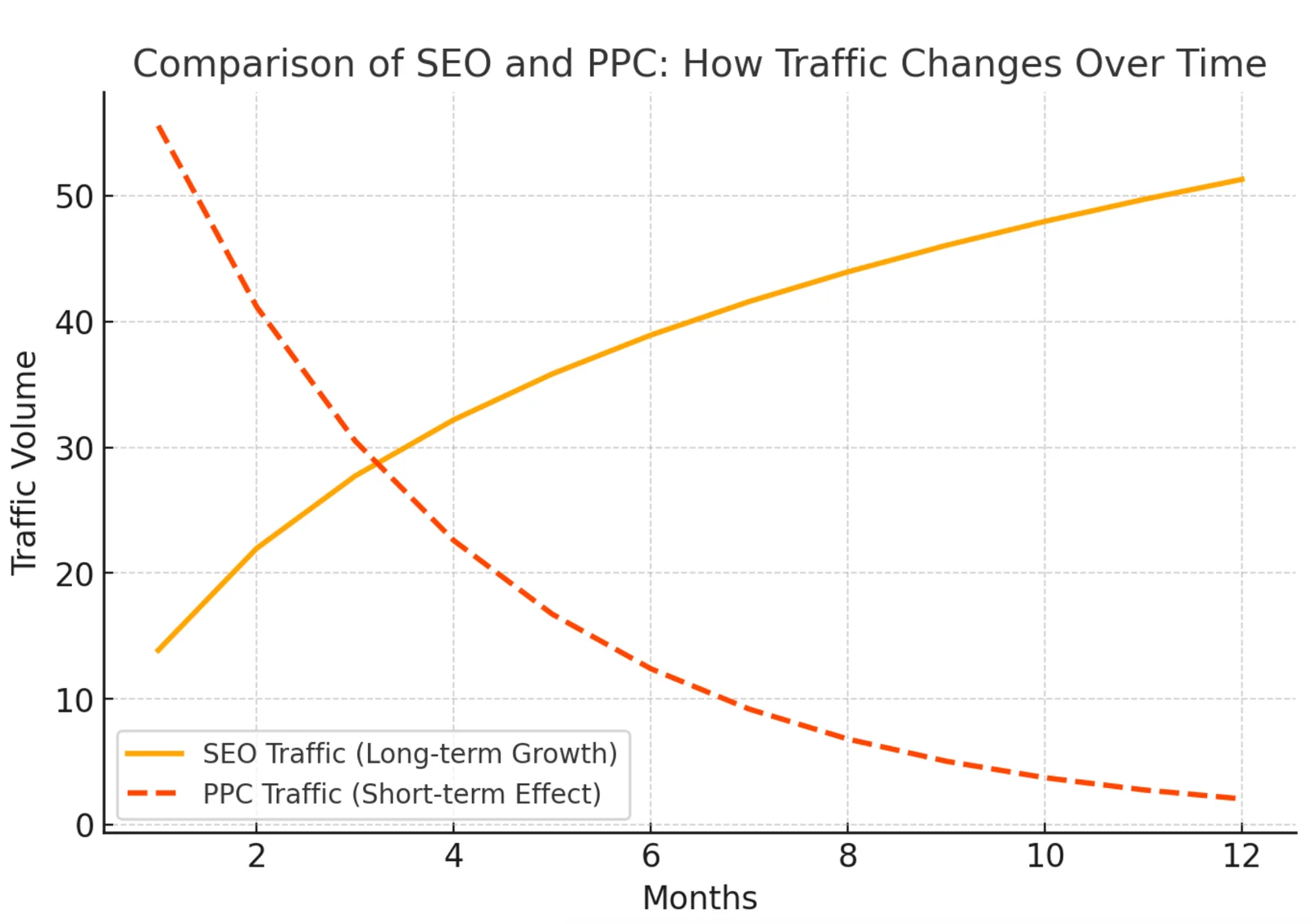
Why it is important to be in the top of the search results:
The first stage of SEO promotion is a website audit. It helps to understand what points need to be improved so that search engines start taking the resource seriously.
The audit includes analyzing the current state of the site, evaluating competitors, and selecting a promotion strategy.
Let’s start with the main thing: does the site meet the requirements of search engines? We evaluate:

For example: the website of the Eat and Get High restaurant had a slow loading time (10 seconds per page), which negatively affected traffic. After optimizing images and caching, the speed increased to 2 seconds, and traffic grew by 40%.
2. Assessment of competitors: what do they do better?
To understand how to promote your website, you need to evaluate your competitors:
According to the Netpeak Journal, companies that are actively working on a content strategy receive significantly more traffic. If your competitors are blogging, you should consider this opportunity for your business.
3. Selecting a promotion strategy
So, you already have an understanding of your weaknesses and competitive advantages. Next, you need to choose a strategy:
The next and very important stage of promotion is technical optimization, which consists of fixing errors on the site, optimizing loading speed, setting up adaptability, and optimizing the URL structure.
1. Fixing errors on the site
Broken links, 404 errors, duplicate pages – all this creates chaos for users and makes them want to close the tab and never come back. Google is not happy either.
What to do: Use Google Search Console, Screaming Frog SEO Spider, Ahrefs, and fix all the errors found.
2. Optimize loading speed
53% of users leave if the site takes more than 3 seconds to load. If this is your case, you should speed up the loading. Here’s how to do it in a fashionable way:
70% of traffic comes from mobile devices. This means that if your website is not adapted, you lose half of your potential customers.
What to do:
Example: go to apple.com from your smartphone – this is what a responsive website should look like.
If your website is built without logic and its structure is chaotic, like a bunch of tangled wires without labels, it looks like a real mess to Google. It also needs order.

What you need to do:
site.com/page.php?id=123 на site.com/blog/seo-optimization);On-page optimization
This is the foundation of SEO, without which even the most expensive advertising will not produce stable results. It determines whether your site will be found by a user or remain somewhere on the back burner of search results. On-page optimization consists of several key elements: proper meta tagging, competent content, linking, and image optimization.
1. Working with meta tags (title, description, h1-h6)
Meta tags are the first thing a search engine sees, so you need to set them up correctly.
2. Content optimization
If your content is bad, even the best SEO won’t help. What should you do?
3. Improve linking
Wikipedia is the king of internal linking. You go to read about Oleksandr Usyk, and 30 minutes later you read about traditional Cossack herrings.
4. Image and media optimization
A good website should load quickly. If not, users will leave, and Google will think it’s some kind of a dead page. How to optimize?

Off-page optimization
The essence of off-page optimization is that if you are linked to by relevant and authoritative websites, Google respects you. Its main methods are link building, crowd marketing, and reputation management.
Link building
is the process of getting external links to your website. The more quality links you have, the more trust you have with search engines.
What works now:
Crowd marketing
This is a strategy of promotion through interaction on forums, social networks, and review sites. It is the skillful posting of useful comments and responses that draw attention to your brand.
Where it works:
SERM (Search Engine Reputation Management) is about monitoring and improving a brand’s online reputation. Users read reviews and search for you on Google, so it’s important to control what they find.
The main steps:
Today, simply writing an article on a website is not enough. It is important that the content is valuable, understandable, and optimized for search engines. How to do it right?
1. Develop a content strategy
The first thing to do is to understand who you are writing for. A text “for everyone” won’t touch anyone. Analyze your audience: what they are interested in, what their pains are, what motivates them.
Also, to make your content useful and in demand, study popular queries through Google Trends, Serpstat, or Ahrefs. This will help you understand what topics people are really interested in. Analyze your competitors, but don’t copy them – look for your uniqueness. Create a content plan for a month or two. Plan topics, define formats: articles, guides, case studies, interviews, checklists.
2. Writing useful articles and blogs
For content to work, it must be structured, logical, and practical. People don’t just read for entertainment – they want to find a solution to their problem.
Basic rules:
Content variety is the key to success. Some people like to read in-depth analytical articles, others like short checklists. Some people watch videos, while others like infographics. Use different formats to attract different audience segments.
3. Optimize your content for SEO
Even if you’ve created a brilliant text, it’s not enough. You still need to make it visible to Google. To do this, you need to choose keywords, create a good text structure, add links to other pages on your site, optimize meta tags, and add media content.
And most importantly, analyze the results. See which articles work best, which keywords bring traffic, and adjust your strategy. Use Google Analytics, Search Console, Ahrefs, or SEMrush to do this.
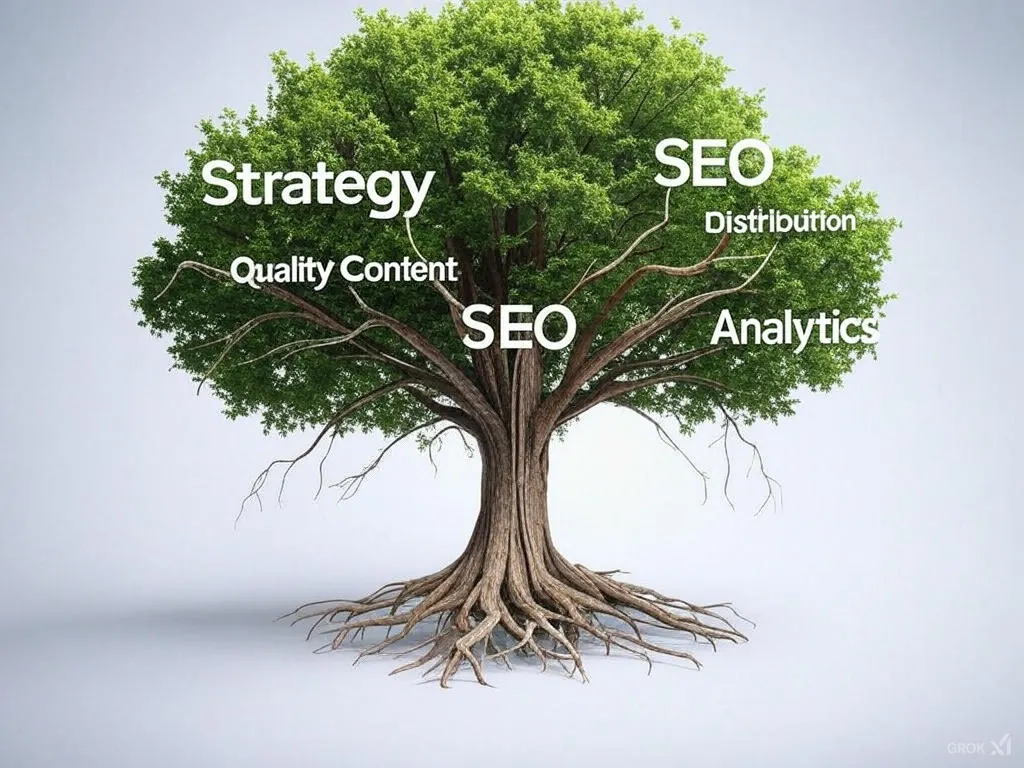
Behavioral factors are signals that Google uses to determine how useful your site is to users. If visitors stay, read, and navigate between pages, it’s good, but if they leave quickly, it’s a problem. Therefore, it is important to understand how to evaluate and improve behavioral metrics.
Google Analytics is the main tool for analyzing user behavior. The main metrics are:
2. Improve the user experience
If the user is uncomfortable on the site, they will leave. The main points for improving UX:
Prom.ua is an example of high-quality UX: it has a clear design, convenient search, and a simple checkout process.
What happens after a user enters the site? Why does he/she not complete the purchase or registration? Google Analytics will help you track it:
So, if the site is fast, convenient, and useful, Google will raise it in the search results. Focus on the quality of the content, analyze user behavior, and test changes to improve the effectiveness of your website.
If you want your business to bring in money and not just hang around in Google, you should trust the professionals – the specialists of the Simon Agency. They know their stuff: they understand the structure of websites, search algorithms, and how to make sure that your business brings customers, not just hangs in the top without conversion.
At Simon Agency, they take a smart approach to promotion:
So, if you’re not on top yet, it’s time to act. Because while you’re thinking, your competitors are already working on SEO. And guess who will be on the first page of Google? Not you. But it can be fixed 🙂


 12.07.2022