 0 800 335 278
What is PPC advertising
 28.04.2025
Tenders and partnerships
team@comon.agencySales department
sales@comon.agency


PPC (Pay-Per-Click) is an advertising model where you pay not for the fact that your ad is hanging somewhere on the web, but only for the action – for a click.
If a person clicks on your ad, you pay. If they don’t, you keep the money in your pocket. This system works on Google, Facebook, Instagram, TikTok, LinkedIn, and many other platforms.

74% of medium-sized businesses invest in PPC because it really works
Atypical insights about PPC:
PPC is a model of online advertising where you pay not for your ad being in a queue among others, but for someone clicking on it. The very fact of a click is already a signal that a person is interested.
It’s short and direct:
According to various studies, the average ROI of PPC campaigns can reach 200%. This means that for every $1 invested, a business receives about $2 in revenue on average. Of course, the actual result depends on the niche, settings, and quality of the advertising strategy.
Key metrics:
Let’s compare PPC with SEO and CPM (cost per impression)
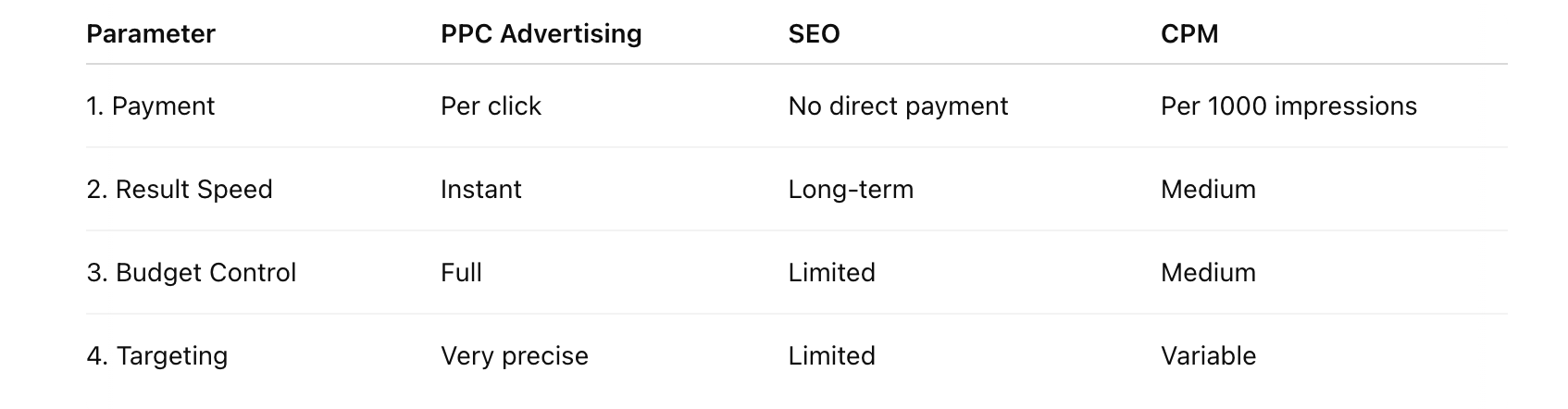
Bottom line:
In 2024, the average conversion rate in Google Ads was 6.96%, and the average cost per click was $4.66. To get the most out of Google Ads, it’s no longer enough to simply insert keywords into the headline. Today, hyper-personalization rules – when your ad knows even what the user doesn’t know about himself. Algorithms analyze their interests, behavior, and even time of activity to show them exactly the product they need.
Automated betting strategies are another secret feature. Artificial intelligence adjusts bets in real time, squeezing out the best result without extra costs. And don’t forget about ad extensions. Contact information, prices, promotions – now you can submit all of this directly in the search results. People don’t even need to click on the website to understand why your offer is better.
Social media has become the new TV advertising. Here, you don’t need to push your product on people’s heads – you need to be able to blend in naturally. What works best? Short videos of up to 15 seconds. If you don’t have time to tell the most important things about yourself during this time, you won’t get another chance. That’s why TikTok and Reels formats are currently the most effective.
Interactivity is another key. People don’t just want to watch, they want to interact. Polls, filters, and quizzes engage people in the game and create a sense of a live dialog with the brand.
You can also work with Lookalike audiences here: when you take your best customers’ database and the platform finds hundreds more similar ones.
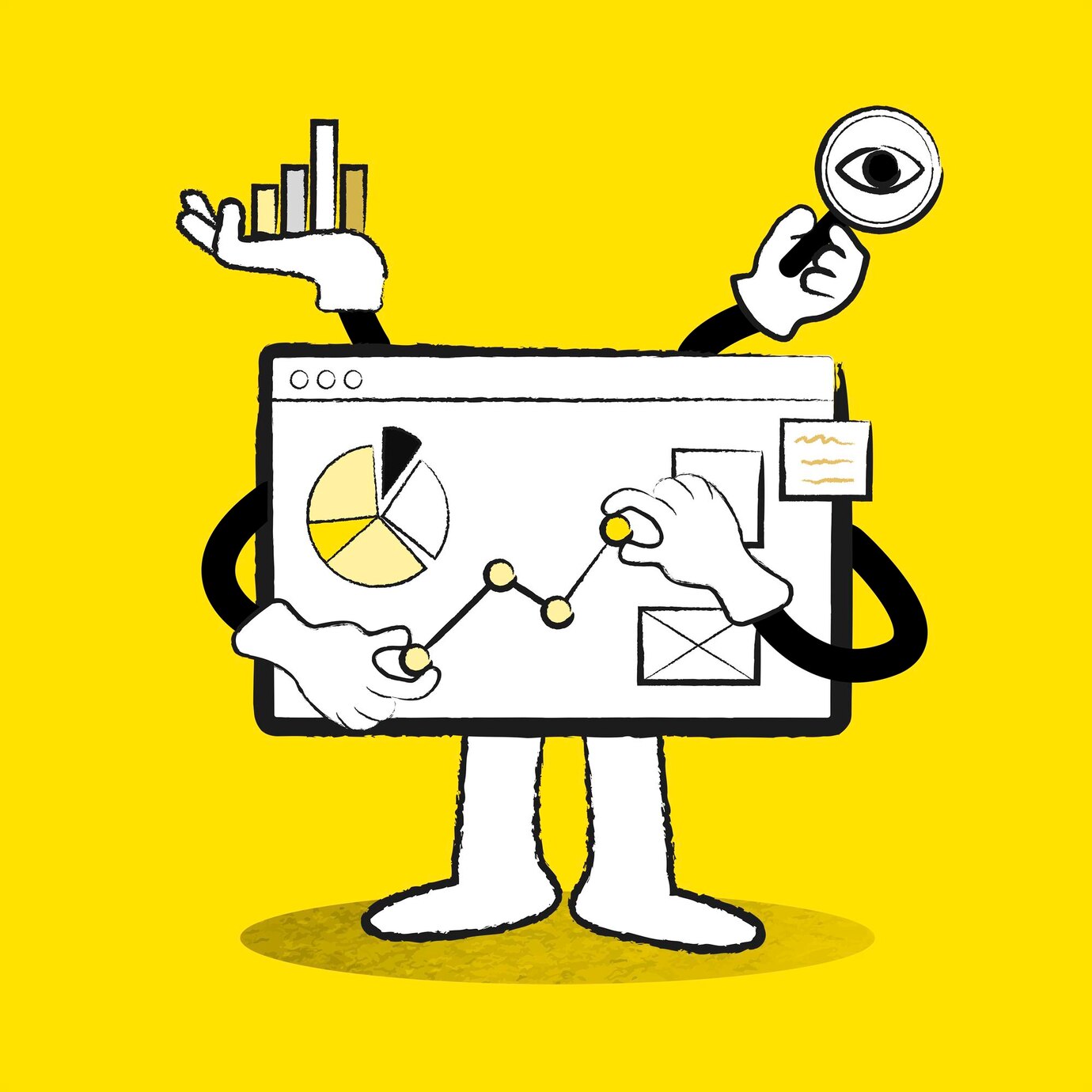
Banners and videos are like billboards in the digital world. If they are cool, they will be noticed and remembered. Therefore, ads should be fast, clear, and convenient for the finger that taps the screen. This means that adaptive ads are a must-have. They automatically adjust to any screen size, whether it’s an old iPhone or an ultra-wide monitor.
Interactive videos are a separate thrill. This is when a person not only watches an ad, but also presses buttons inside it: votes, chooses an option, reacts. When advertising becomes a game, attention is retained many times longer. And yes, you cannot do without A/B testing. Throw different variants of banners at the market, mix colors, headlines, messages – and see what works best.
And now we’ll share our observations on why PPC makes businesses move faster, more agile, and more profitable.
The first visitors can appear on the site within a few hours after the campaign is launched. And on the day of launch, you can get the first sales or leads, while organic search results take weeks or months.
Fact: 90% of Internet users see Google ads. That means that 9 out of 10 people come across PPC ads, even if they think they haven’t noticed anything.
One of the coolest features of PPC is the flexibility to customize your audience. You clearly choose:
And all of this can be customized on the fly.
As a result, you don’t burn your budget on people who don’t need your product. You talk directly to those who are ready to open their wallets. By the way, PPC allows you to quickly test new ideas: change the targeting, rewrite the ad, jump to another audience – and all without losing momentum.

With PPC, you can clearly see where every hryvnia goes. And you pay only for a click, which means only for a real action.
Why it’s cool:
And one more thing: you always know the ROI. No more “it seems like the ads are working”: everything is on graphs and in numbers.
And now the sweetest part. PPC advertising actually makes money. The average ROI of PPC campaigns is 200%, and the conversion rate of PPC traffic is 50% higher than organic traffic. So if someone else thinks that PPC is an expense, not an investment, feel free to show them these numbers.
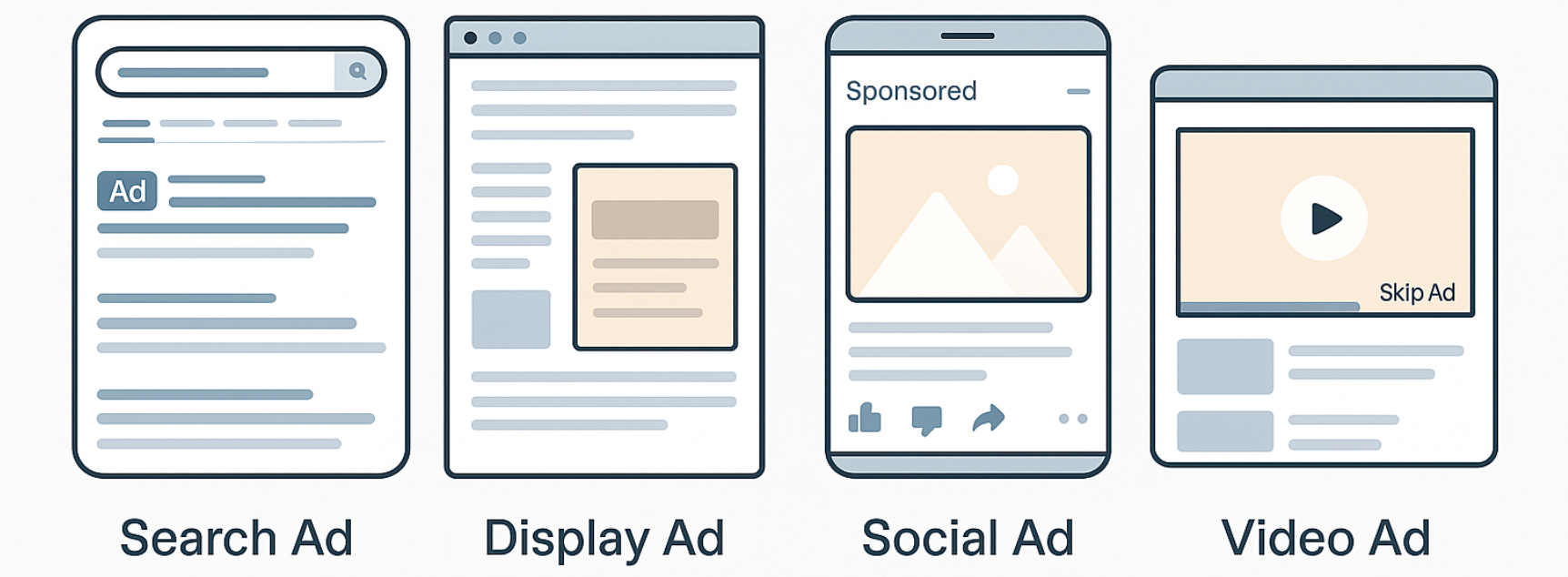
PPC advertising is immediately visible. Most often, it appears as text ads that appear above or below organic search results on Google. If you look closely, there is always a small “Ad” next to the title, which honestly warns you that it is a paid ad.
Another common format is display advertising. These are the same banners you see on news sites or in apps: bright, catchy, and often with an image that instantly catches your eye.
On social media, PPC looks even more natural. It can be a post in a feed or a story on Instagram or Facebook that looks very similar to regular content. The only clue is the “Sponsored” or “Advertising” mark. If the user stops, likes, or comments, the ad is working.
And on YouTube, everything is even more straightforward: you start a video, and a commercial appears before or within it. And here everything is fair: either you watch it or click “Skip”.
1. The Whistler Medical Aesthetics clinic faced a classic story: a website, services, and almost no visitors. The brand was not recognized, and traffic to the website brought neither leads nor money. The owners felt that they were idle at a time when competition in the aesthetic field was growing every day.
Solution: We had to not only increase the number of visits to the website, but also bring in the most interested audience. To do this, we launched dynamic search ads in Google Ads. Google generated headlines based on the site’s content and showed ads to those who entered relevant queries. We also added geo-targeting, a setting that showed ads only to people from a specific region where the clinic actually provided services.
Result:
This case study clearly shows that the right combination of dynamic ads and local targeting can work better than any “super creative ad”.
2. The Inn & Spa at Cedar Falls hotel complex had excellent facilities, beautiful nature around, but the level of bookings was consistently low. The owners saw in the analytics that people were visiting the website, but either not booking anything or choosing competitors.
Solution:
Standard advertising would not help here. So they did a comprehensive optimization:
The result: revenue from bookings increased by 89% year-on-year.
3. Online store of branded glasses. Problem: high cost per conversion. It was expensive to buy clicks, and there were few real customers. The budget was spent quickly, and efficiency suffered.
Solution: Cómon Agency performed a deep optimization:
Result: The cost per conversion decreased by 48%, and the number of conversions increased by 329%.
4. The fitness app aimed to attract users who would not only install the app but also sign up for a paid annual subscription.
Solution:
Result:
The target audience clearly understood the benefits – and was willing to pay.
How much does PPC advertising really cost and how to avoid wasting your budget on the first three clicks? There is no universal price, but there is logic, there are numbers, and there is common sense that will help you keep a balance between “want” and “can.”
So, what does the price of PPC advertising depend on?
There are clear steps:
Formula №1
Budget = Number of required clicks × Average cost per click
Formula №2
Budget = (Target revenue / Average revenue per conversion) × (CPC / Conversion)
4. Consideration of seasonality
In November (read: Black Friday), bets go off into space. In January, it’s the other way around. Plan your campaigns with trends in mind to avoid unpleasant surprises.
Relevant data worth knowing:
You go into your PPC settings, and you feel like you’ve opened an airplane engine and someone is telling you to start it: “Start it”? Then it’s best to immediately contact those who know where to push. Namely, to the experts from Cómon Agency.
Cómon Agency internet marketing agency covers almost everything:
So, if you’ve read this far, you already know that clicking buttons in Ads Manager is not an option. It’s time to act:
Questions about cooperation or partnership:
team@comon.agency
Do you want to start an ad campaign right away?
sales@comon.agency
Or a quick option: leave a request for a consultation through the website. After the application, a Cómon Agency professional will contact you to discuss the details.

 12.01.2024
